
The HCV Knowledge to Action (K2A) Program
Overview
CAHR is a proud recipient of funding via the Public Health Agency of Canada (Community Action Fund) for the period 2022-2027. This funding envelope supports the Canadian Alliance in HIV and HCV Knowledge to Action program (or “K2A Program” in short) which leads and supports efforts that advance program science – applying theory and knowledge to improve public health programs.
What does the K2A Program do?
The Knowledge to Action (K2A) Program works to increase the application of the Program Science framework among community members, public health professionals/practitioners, service providers and researchers to prevent new infections and improve the health and well-being of people affected by HIV, HCV and STBBI in communities across Canada.
K2A activities include training workshops (3-4 per year), conference sessions (two per year), mentorship efforts (one per year), science cafes (one per year), and the development of e-learning modules (two per year) that focus on fostering academic/community interactions. Where possible, activities include the direct participation of community-based service organizations and persons with lived experience with the aim of improving to the ways programs are designed, implemented and evaluated, thus strengthening Canada’s HIV/HCV/STBBI response.
What is Program Science?
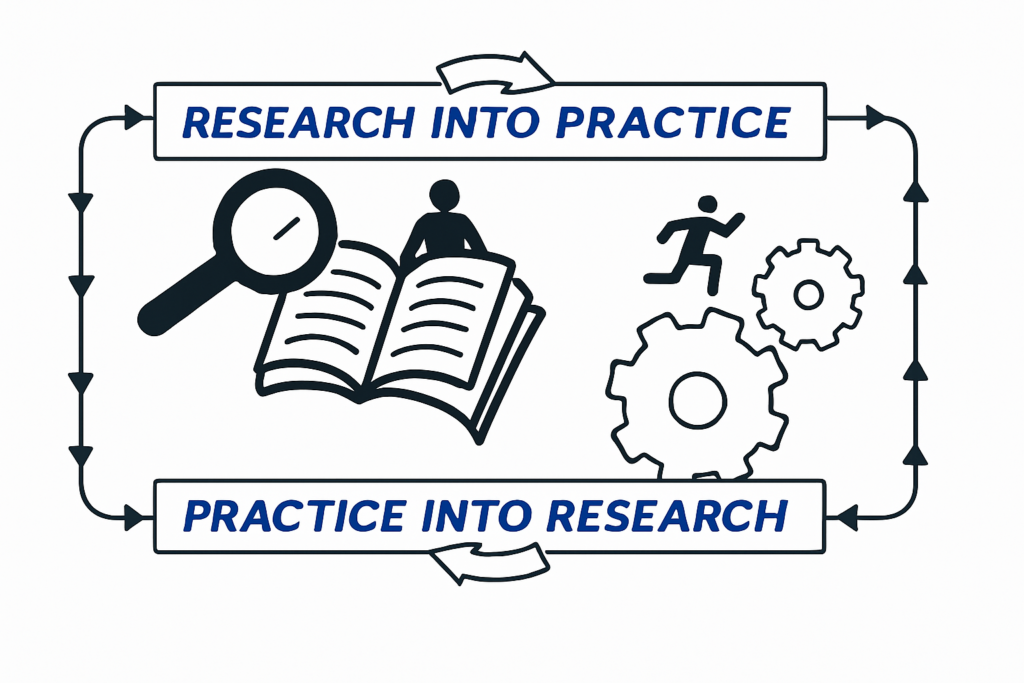
Program Science emphasizes collaboration between the science that studies key health and social issues and the actual programs that serve affected people. Specifically, Program Science is “the systematic application of theoretical and empirical scientific knowledge to improve the design, implementation and evaluation of public health programs” (Blanchard, 2012).
Beyond that technical definition, Program Science ensures research is driven by public health programs and their field-level challenges and experiences. It is focused on gathering information while programs are happening – during their planning, implementation, and evaluation phases – to support program improvements and to allow for the scale-up and transfer of effective programs to other locations and populations. The goal of Program Science is to reduce incidence by optimizing the choice of “the right strategy for the right populations at the appropriate time” (Blanchard, 2012). Further simplified, Program Science is turning what we know into what we do.
Supported events
Below is an overview of the events supported by the K2A Program.
Conference sessions
Past conference sessions:
- CAHR Conference Session: Setting the Context on HIV in Manitoba
April 23, 2026 (Winnipeg)
Watch the video
This session examined the unique and urgent HIV landscape in Manitoba where rising rates have been shaped by intersecting syndemic drivers including structural inequities, substance use, housing instability, and barriers to culturally safe care. Indigenous community leaders and emerging voices shared perspectives that situate these challenges within a strength-based framework, while highlighting resilience, leadership, and community-driven responses. The session provided essential context for the CAHR 2026 Conference and invited participants to reflect on how research, policy, and partnership can better respond to evolving realities in Manitoba and across Canada. Participants included Lenard Monkman (CMAJ), Michelle Monkman (Keewatinohk Inniniw Minoayawin Inc.), Anita Crate (Keewatin Tribal Council), Agnes Denedchezhe (Keewatin Tribal Council), Nadine Erickson (Cree Nation Tribal Health Centre), Carla Quill (Sapotaweyak Cree Nation Health Authority), and Carla Cochrane (First Nations Health and Secretariat of Manitoba). - CAHR Conference Session: From Dialogue to Action: Reimagining Black HIV Equity Research in Canada
Dr. Notisha Massaquoi (University of Toronto-Scarborough)
April 23, 2026 (Winnipeg)
Watch the video
Despite decades of research documenting HIV disparities affecting Black communities in Canada, progress toward equitable outcomes remains uneven. Black communities continue to bear a disproportionate burden of HIV while structural factors including anti-Black racism, inequitable access to care, and gaps in race-based health data limit the effectiveness of national HIV responses. At the same time, research focused on improving HIV outcomes for Black communities remains limited, Black HIV researchers are small in number and community voices are often insufficiently integrated into the development of research agendas and policy solutions. This session explored the need for a paradigm shift in HIV research from documenting disparities toward advancing equity-focused, community-led research that produces actionable solutions. Drawing on emerging national initiatives and community-engaged research approaches, the presentation highlighted the role of participatory and Afrocentric dialogue models in fostering meaningful collaboration between HIV researchers and Black communities. The session also examined how community-led research processes can help identify research priorities, strengthen knowledge mobilization, and support the development of racially relevant and evidence-informed interventions. - CAHR CONFERENCE: COLLABORATIVE RESEARCH FRAMEWORKS IN HIV RESEARCH: COLLECTIVE EXPERIENCES AND EMERGING CONTEXTS
Dr. Cathy Worthington
May 3, 2025 (Halifax)
Watch the video - CAHR CONFERENCE: SYNDEMICS OF HIV, STBBIS AND SUBSTANCE USE IN THE PRAIRIES: UNIQUE CHALLENGES AND LOCAL SOLUTIONS
May 1, 2025 (Halifax)
Watch the video - CAHR CONFERENCE: ADVANCING HIV PREVENTION AND CARE AMONG AFRICAN, CARIBBEAN, AND BLACK (ACB) WOMEN THROUGH COMMUNITY LEADERSHIP AND CRITICAL APPLICATION OF COMMUNITY BASED PARTICIPATORY RESEARCH (CBPR) PRINCIPLES
Dr. Josephine Etowa
April 27, 2024 (London, ON)
Watch the video - CAHR CONFERENCE: EQUITY, DIVERSITY, AND INCLUSIVITY IN HIV/AIDS RESEARCH: CHALLENGES AND OPPORTUNITIES
Dr. Isaac Luginaah
April 26, 2024 (London, ON)
Watch the video - CAGH CONFERENCE SESSION: HIV SELF-TESTING & NURSE-LED HIV PREVENTION: HOW GETAKIT.CA AND PREP-RN CAN HELP ACHIEVE THE 95-95-95 TARGETS
Patrick O’Byrne and Lauren Orser
October 16, 2023 (Ottawa)
This session unfolded with a focus on “HIV Self-testing & Nurse-led HIV Prevention: How GetaKit.ca and PrEP-RN Can Help Achieve the 95-95-95 Targets.” The session featured keynote speakers Patrick O’Byrne and Lauren Orser, who are recognized for their pioneering efforts in HIV prevention and care.The essence of the workshop was to discuss the critical role of nurse-led interventions in achieving the ambitious UNAIDS 95-95-95 targets by 2030. This goal aims for 95% of people living with HIV to know their status, 95% of those diagnosed to be on treatment, and 95% of those on treatment to achieve viral suppression.The speakers delved into the journey since 2013, highlighting the launch of Canada’s first HIV PEP program, PEP-RN, at a local STI clinic, followed by the integration of PrEP into this clinic in 2018, known as PrEP-RN. A landmark development came in 2020 with the initiation of Canada’s first at-home HIV self-testing program, GetaKit.ca. The uniqueness of these programs lies in their nurse-led approach.
The objectives of the workshop were clear and multifaceted:
a) Detailing nurse-led HIV self-testing, and PEP and PrEP strategies.
b) Reviewing the outcomes of GetaKit.ca and the combined PEP/PrEP-RN programs.
c) Discussing the adaptability of these interventions in different jurisdictions.
As part of the outcomes and results, the presenters showcased their programs and data, emphasizing the prevention, testing, and linkage to care pathways they had established. They engaged with attendees to identify the essential elements of their projects that should be retained, such as support and linkage to care for end-users, while also considering adaptable elements to maximize uptake and success in various settings. The main messages from the session were powerful and impactful. The nurse-led PEP and PrEP, along with HIV self-testing initiatives in Ottawa and Ontario, Canada, demonstrated significant success. These included high uptake, efficient use of resources, strong linkage to care, and a notable decrease in overall HIV diagnosis numbers. - CAHR CONFERENCE: SEXUALIZED DRUG USE (‘CHEMSEX’) AMONG MSM: REALITIES, RISKS AND REQUIRED RESPONSES
Dr. Adam Bourne
April 29, 2023 (Quebec City)
Watch the video - CAGH CONFERENCE: LOCAL IMPLEMENTATION AS A KEY TO INCLUSIVITY
November 23, 2022 (Toronto)
There have been increasing calls for greater autonomy and local ownership and participation of people in need in global health research. Through frameworks and approaches such as implementation science, there are opportunities to optimize, and scale-up if needed, localized work and solutions. The very principles of “local level engagement” would require that the needs of communities are addressed, and from the start, provide a mechanism to ensure the application of equity, diversity and inclusion principles as well as inclusive global health.Held in conjunction with the 28th annual Canadian Conference on Global Health (CCGH 2022), this session asks you to consider: How can local empowerment make a difference and align with district and national efforts and policies? How is empowerment linked to local and district capacity to develop evidence-based planning and equity-oriented resource allocation? How can local implementation serve to operationalize equity, diversity, and inclusion principles, and progress an inclusion agenda in global health? How does local implementation empower researchers and practitioners in diverse settings?
A panel discussion with Dismas Matovelo, Maureen Owino, Patrick Segawa, and Dr. Xiaolin Wei. Moderated by Margaret Mutumba. - CAHR CONFERENCE: WOMEN SPEAK: COMMUNITY BUILDING FOR AND BY WOMEN LIVING WITH HIV IN CANADA
April 29, 2022 (Virtual)
Watch the video
Workshops and mentorships
Each year, the K2A Program leads and/or supports the educational workshops that strengthen the skills and abilities of target audiences to provide stigma-free and effective prevention, testing, treatment and care services. Additionally, mentorship activities that team advanced experts in the Program Science with community-based researcher teams and peer researchers living with HIV/HCV are undertaken to help them prepare and refine an intervention research projects.
Recently supported workshops include:
The Power We Hold, Forge, and Reclaim – Winnipeg – April 23, 2026
Led by Maureen Owino (York University), The Power We Hold, Forge, and Reclaim was a transformative workshop grounded in Ukataaji (Refusal) as a Black emancipatory framework for resurgence, self-determination, and collective action in HIV responses. The workshop brought together over 70 Black community leaders, people with lived experience, Black-led organizations, researchers, policymakers, and service providers, to imagine and activate futures beyond imposed limits. The meeting centred Black communities as leaders and decision-makers in their own HIV responses, mobilizing knowledge, culture, care, and commitment to reshape trajectories of health, dignity, and survival.
Centering Indigenous Knowledge and Wholistic Approaches to Address Syndemics in Manitoba and Beyond: A Solutions Focused Gathering – Winnipeg – April 23, 2026
This workshop brought together Indigenous leaders, researchers, service providers and community members to advance wholistic, strength-based responses to HIV, STBBI, substance use and the systemic impacts of coloniality, racism, poverty and trauma. Rooted in ceremony, relationship and cultural safety, the event – led by Dr. Alexandra King, University of Waterloo – included experiential learning, an immersive 4D spatial sound journey and sharing of Indigenous-led innovations from Manitoba and across the region, from British Columbia to Ontario. Together, participants co-developed practical, community-based approaches that braided harm reduction, cultural safety and systems change to advance health equity for Indigenous peoples.
Power Up: A Workshop for Peer Researchers & Research Allies Using AI to Advance HIV/STBBI Research Proposals within a Program Science Framework – Virtual – October 2025-January 2026
This innovative workshop brought together 12 Peer Researchers and Research Allies (students) to work in pairs to co-design HIV/STBBI research proposals using the latest in AI tools. Grounded in a Program Science framework and consisting of four online learning segments (two hours each), the workshop reinforced that research works best when community priorities are at the forefront. The workshop was led by Francisco Ibanez-Carrasco PhD and supported in part by funding from the Public Health Agency of Canada (PHAC).
An overview of CAHR’s upcoming workshops can be found here and a list of past workshops here.
Science Cafés
As part of its commitment to expanding the understanding and application of Program Science, the K2A Program supports community engagement activities, which we like to call Science Cafés. Science Cafés are informal science education activities, with varying formats, that can take place both in-person and virtual. The typical cafe structure involves a brief talk by an expert speaker(s), followed by a question and answer or conversation period with the audience.
Science Cafés welcome people who may or may not typically get involved with scientific discussions. They are not exclusive club meetings for scientists and science majors, nor do they take place exclusively in lecture halls or science museums. Rather, Science Cafés happen in informal community gathering spaces such as restaurants, libraries, bars, etc. In all cases, no admission is charged. Successful cafés foster an informal atmosphere where all participants feel encouraged to participate. These are no long lectures with passive audiences listening to an expert, rather they are dynamic, two-way interactions between scientists, those with lived-experience and the public. In this way, the public feels empowered to learn, and the speaker gains valuable perspective on his or her own work.
Recent events include:
- Understanding HIV in Ontario: Insights from the OHTN Cohort, Data Linkages, and Emerging Priorities – Burlington – April 28, 2026
The Ontario HIV Treatment Network Cohort Study (OCS) is one of Canada’s longest-running clinical cohorts of people living with HIV, integrating clinical, laboratory, and participant-reported data to support equity-informed surveillance, research, and policy in Ontario. OCS-based research has generated important insights into HIV epidemiology, engagement in care, aging with HIV, comorbidities, diagnostics, and health system performance. This Science Café highlighted key findings from OCS research and identified priority knowledge gaps aligned with Ontario’s HIV agenda. A particular focus was placed on opportunities to strengthen evidence through administrative data linkage, including health services use, hospitalizations, mortality, and social determinants of health. The event was hosted by Dr. Lawrence Mbuagbaw (McMaster University and Chair and PI of the OCS), Dr. Ann Burchell (University of Toronto and Co-PI of the OCS) and Tanya Lazor (University of Toronto). See Café Poster here. - CIHRRC-CAHR-HIV in Motion Event – November 27, 2025
Watch the video here.
E-learning modules
The K2A program collaborates with community members, policy makers, educators, practitioners/service providers and researchers in the development of E-learning modules. These modules are designed to support communities, students and research teams in the many aspects of HIV, community-based research, and intervention research.
A full list of the supported modules can be found here.