
CAHR Professional Development Awards HighlightsHarvey Palalay
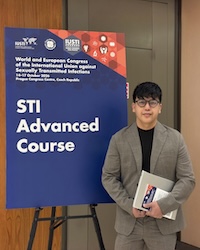
Harvey Palalay is a second-year PhD student at the University of British Columbia. His research examines how DoxyPEP use among men who have sex with men in British Columbia is associated with gonorrhea and antimicrobial resistance. By linking program dispensing and laboratory data and modelling possible policy scenarios, he aims to estimate both the benefits and potential resistance-related harms of DoxyPEP. Thanks to the support from a CAHR Professional Development Award, Harvey attended the 27th IUSTI World Congress – Europe 2026 in Prague, Czech Republic. During the conference, he participated in the STI Advanced Course and attended sessions covering DoxyPEP, antimicrobial resistance, diagnostics, antimicrobial stewardship, and equity in STI care. Harvey also presented a clinical gonorrhea case during the Advanced Course, contributing to discussions on treatment response, persistent infection, and resistance testing.
CAHR Professional Development Awards are designed to offer support for the next generation of HIV researchers seeking to build their skills in the field of HIV research. Awards are available across CAHR’s four tracks (basic, clinical, social sciences, epidemiology and public health) as well as community-based research.
Without support from CAHR, Harvey would not have been able to attend this unique international learning opportunity, engage with leading STI researchers and clinicians, or share his work during the STI Advanced Course. The conference provided valuable exposure to current debates and emerging evidence in STI diagnosis, treatment, prevention, and surveillance.
“CAHR’s support made it possible for me not only to attend IUSTI Europe 2026, but also to present a gonorrhea case during the STI Advanced Course and learn from the thoughtful discussions taking place across the field. I’m sincerely grateful to CAHR for investing in professional development and creating opportunities for researchers to contribute, learn, and bring new insights back.”
Through this experience, Harvey gained a good understanding of how clinical care, laboratory testing, and public health surveillance work together to address STI prevention and control. The sessions highlighted both the strengths and limitations of symptom-based management, culture and susceptibility testing, and molecular diagnostic methods. He also learned that effective use of resistance testing depends not only on laboratory methods but also on access to testing, timely reporting of results, and appropriate follow-up care.
The DoxyPEP session provided important insights into implementation, monitoring, and evaluation. Discussion emphasized the importance of carefully measuring antibiotic exposure and health outcomes, understanding differences across infections, and interpreting resistance data thoroughly.
“Presenting at the STI Advanced Course gave me the opportunity to discuss how treatment decisions can depend on susceptibility results, guidelines, and timely testing. I valued hearing perspectives from clinicians and researchers working in different settings. CAHR’s support made it possible for me to take part, and I’ll bring what I learned back to my PhD research on DoxyPEP, gonorrhea, and antimicrobial resistance.”
Attending the IUSTI World Congress directly contributed to Harvey’s professional development and knowledge gained will inform his future research. Harvey also plans to share key lessons from the conference with colleagues and collaborators through his regular learning series discussions, helping to extend the impact of the conference beyond his own work.