
CAHR Professional Development Awards HighlightsDr. Yuanchao Ma
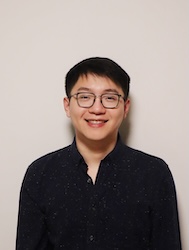
Dr. Yuanchao Ma is an IVADO Postdoctoral Fellow in the Department of Pediatrics at McGill University and a researcher at the Research Institute of the McGill University Health Centre (RI-MUHC). His research focuses on the responsible use of artificial intelligence (AI) in HIV care, with a particular interest in improving treatment adherence, digital health interventions, and HIV prevention. Thanks to the support from a CAHR Professional Development Award, Dr. Ma attended AIDS 2026 in Rio de Janeiro, Brazil. During the conference, he presented two posters on the use of large language models to identify antiretroviral therapy adherence barriers and risks: one focusing on the development and testing of this approach and the other evaluating it from a responsible AI perspective. He also participated in sessions focused on HIV prevention, PrEP access, digital health, and AI-enabled interventions.
CAHR Professional Development Awards are designed to offer support for the next generation of HIV researchers seeking to build their skills in the field of HIV research. Awards are available across CAHR’s four tracks (basic, clinical, social sciences, epidemiology and public health) as well as community-based research.
Without support from CAHR, Dr. Ma would not have been able to attend AIDS 2026, present his research to an international audience, and engage with researchers, clinicians, community members, and innovators working at the intersection of HIV and digital health. The conference provided an important opportunity to exchange ideas, strengthen collaborations, and explore how emerging technologies can be responsibly integrated into HIV care.
“CAHR’s support gave me the opportunity to share our work and learn from people approaching HIV care from very different perspectives. Hearing directly from clinicians and community members about what they actually need reminded me that responsible AI in HIV care should not just be built for communities, but with them.”
Through this experience, Dr. Ma strengthened his understanding of how AI-enabled interventions can move beyond technical innovation and become practical tools within healthcare systems. A key lesson was that building an effective AI model is only one part of the challenge. Successful implementation also requires trust, safety, human oversight, healthcare integration, and long-term sustainability. Sessions on responsible AI use reinforced the importance of designing technologies that are equitable, transparent, and responsive to the needs of both healthcare providers and patients.
The conference also provided valuable insights into innovative approaches for expanding access to HIV prevention services. Dr. Ma learned about emerging PrEP delivery models that combine digital tools, remote consultation, HIV self-testing, and automated dispensing systems. These examples highlighted how digital health solutions can be integrated across the entire care pathway to improve access and patient engagement.
“The question I want to pursue is how AI can help people understand their health well enough to act on it. At AIDS 2026, PrEP programs combining self-testing, remote consultation, and automated dispensing showed me how digital tools can connect information with access to care. For MARVIN and MARVIN-CONNECT, that means connecting people to the local services they can actually access.”
The experience has directly contributed to Dr. Ma’s professional growth and long-term career goals in AI, digital health, and HIV prevention. Insights from AIDS 2026 are helping shape the ongoing development of MARVIN, a bilingual AI chatbot supporting HIV self-management, and MARVIN-CONNECT, which extends this work to PrEP navigation. These insights are particularly relevant to adapting the tools to local needs and connecting users with available services. Following the conference, Dr. Ma shared key findings with his research team and students through meetings and group discussions to inform ongoing and future research.