
CAHR Professional Development Awards HighlightsSaeedeh Moayedi-Nia
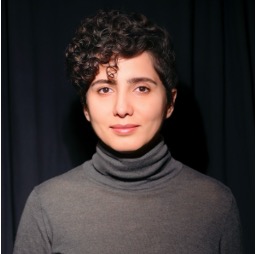
Saeedeh Moayedi-Nia is a 4th-year PhD student at the University of Toronto. Her research focuses on HIV and preventive care engagement and disparities among people living with HIV using longitudinal study designs and population-based administrative health databases. Thanks to support from a CAHR Professional Development Award, Saeedeh attended the International Workshop on HIV and Hepatitis Observational Databases (IWHOD) 2026 in Thessaloniki, Greece. Funding allowed her to present findings from her project on validating HIV laboratory data in the Ontario Laboratories Information System, an administrative health data source, to support population-level monitoring HIV care engagement, and to participate in hands-on causal inference training directly relevant to her dissertation.
The CAHR Professional Development Awards are designed to offer support for the next generation of HIV researchers seeking to build their skills in the field of HIV research. Awards are available across CAHR’s four tracks (basic, clinical, social sciences, epidemiology and public health) as well as community-based research.
Without support from CAHR, Saeedeh would not have been able to participate in the workshop, which she considers one of the most methods-intensive professional development experiences she has had. The workshop directly connected early-career researchers with cutting-edge debates in causal inference using observational and administrative health data, robust longitudinal methods, and emerging approaches in real-world evidence generation.
“The CAHR Professional Development Award allowed me to attend a highly specialized international workshop where I could present my ICES-based HIV research, receive feedback from researchers working with similar research questions and study designs, and gain training in longitudinal causal inference methods,” said Saeedeh. “I can apply this directly to my doctoral work.”
Through this experience, Saeedeh gained new skills and improved her ability to evaluate analytic choices for longitudinal HIV research.
“This experience strengthened both my methodological skills and my confidence as an early-career health system and HIV researcher.”
Together, these experiences have strengthened Saeedeh’s interest in applying advanced methods in HIV research. Thanks to this opportunity, she can more confidently develop future analytic directions for her dissertation and continue advancing her work as an emerging HIV researcher.