
CAHR Professional Development Awards HighlightsCara Follows
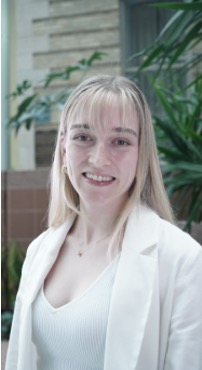
Cara Follows is a second-year MSc student in the Department of Medical Microbiology and Infectious Diseases at the University of Manitoba. Her research focuses on the impact of menopause on systemic and mucosal inflammation in women living with HIV. Thanks to the support from a CAHR Professional Development Award, Cara was able to complete a two‑week research training placement at the Partners for Health and Development in Africa (PHDA) Immunology Lab in Nairobi, Kenya. Funding allowed her to gain hands-on experience in fresh mucosal cell processing, a set of protocols that cannot be completed in Winnipeg because it requires an immediate sample handling. It also gave her an opportunity to present her MSc thesis research at the Annual STI/HIV/SHR Collaborative Research Group Meeting and connect with experts in STI/HIV fields.
CAHR Professional Development Awards are designed to offer support for the next generation of HIV researchers seeking to build their skills in the field of HIV research. Awards are available across CAHR’s four tracks (basic, clinical, social sciences, epidemiology and public health) as well as community-based research.
Without support from CAHR, Cara would not have been able to participate in this opportunity and gain hands-on experience in an international laboratory setting.
“Receiving the CAHR Travel Award allowed me to spend two weeks training in mucosal immunology in Nairobi, an experience that profoundly shaped both my research skills and my perspective as a scientist.”
Through this experience, Cara developed new skills in cervical mononuclear cell isolation, flow cytometry staining panels, and mucosal sample methods used across current HIV and HPV immunological studies. She also learned more about the experiences and barriers faced by female sex workers in Nairobi through visits to multiple Sex Worker Outreach Program (SWOP) clinics, participation in community programming, and time spent with community members.
“Seeing firsthand how trust, respect, and collaboration guide this work deepened my commitment to community‑led infectious disease research and strengthened my confidence in pursuing a career as a clinician‑scientist.”
The experience influenced Cara’s future career goals by strengthening her commitment to infectious disease research and by highlighting how important community-driven and community-led approaches are to effective care.