
CAHR Professional Development Awards HighlightsTermeh Shakery
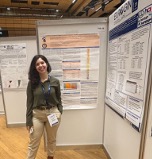
Termeh Shakery is a fourth-year MSc student in the Department of Medical Microbiology and Infectious Diseases at the University of Manitoba. Her research focuses on the vaginal microbiome as a biological correlate of human papillomavirus (HPV) clearance among female sex workers in Nairobi, Kenya. Thanks to the support from a CAHR Professional Development Award, Termeh was able to attend EUROGIN 2026, a leading international HPV congress which took place in Vienna, Austria. Funding allowed her to present her poster on longitudinal vaginal microbiome composition and HPV clearance, and engage directly with global experts in HPV, microbiome science, and cervical cancer prevention.
The CAHR Professional Development Awards are designed to offer support for the next generation of HIV researchers seeking to build their skills in the field of HIV research. Awards are available across CAHR’s four tracks (basic, clinical, social sciences, epidemiology and public health) as well as community-based research.
Without support from CAHR, Termeh would not have been able to participate in this opportunity and gain hands-on experience presenting her work and learning from international leaders in HPV and microbiome research.
“Presenting at EUROGIN and getting direct feedback from global experts completely changed how I think about my own data,” she said.
Through this experience, Termeh gained deeper understanding of how the vaginal microbiome influences HPV persistence and cervical cancer risk. She learned about new metabolic and epigenetic approaches that are shaping the field, as well as emerging ideas on how microbiome profiles may be used as clinical biomarkers. She attended sessions on next‑generation sequencing, bioinformatics, HPV screening in low‑ and middle‑income countries, and cervical screening among women living with HIV, all of which helped her situate her own work within a broader scientific and global context. These sessions introduced her to hands-on methodological approaches she can apply in her thesis analyses. Being exposed to a European research setting, where high vaccination coverage creates very different epidemiological patterns, also expanded her perspective and strengthened the comparative lens in her research.
“Attending EUROGIN showed me how my work on HPV clearance and the vaginal microbiome fits into a much larger global conversation,” she described. “I came back with new analytical ideas and a clearer sense of where I want to take this research after my thesis.”
The experience helped shape Termeh’s career goals by strengthening her interest in microbiome-focused HPV research, sharpening her analytical approach, and opening the door to future collaborations that connect vaginal microbiome science with HIV prevention efforts.