
CAHR Professional Development Awards HighlightsTahani (Soleil) Shraida
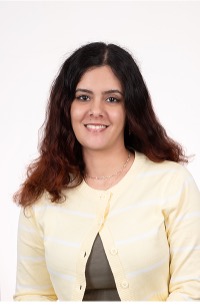
Tahani (Soleil) Shraida is a first-year MSc student at Simon Fraser University. Her research focuses on examining sex and gender differences in antiretroviral (ARV) drug concentrations and side effects among people living with HIV, with the goal of addressing sex- and gender-related inequities in HIV care through community-engaged research in women’s health.
Thanks to the support from a CAHR Professional Development Award, Tahani was able to attend the New HIV Researcher Workshop and the 35th Annual Canadian Conference on HIV/AIDS Research (CAHR 2026). Funding allowed her to participate in hands-on training sessions, attend scientific presentations across multiple tracks, and deliver her first oral abstract presentation in the Epidemiology track.
The CAHR Professional Development Awards are designed to offer support for the next generation of HIV researchers seeking to build their skills in the field of HIV research. Awards are available across CAHR’s four tracks (basic, clinical, social sciences, epidemiology and public health) as well as community-based research.
Without support from CAHR, Tahani would not have been able to participate in this opportunity and gain experience presenting her work, receiving feedback, and connecting with national researchers.
“Throughout the CAHR Conference and the New HIV Researcher Workshop, I enjoyed learning from experts who had a lot of knowledge to share,” said Tahani. “I also had the honour of presenting my research and connecting with researchers who found my work interesting.”
Through the New HIV Researcher Workshop, Tahani was able to develop practical knowledge about grant writing, preparing a manuscript, and the process involved in securing funding through CIHR. She also learned why the Tri-Agency narrative CV is becoming standard practice and how to use it effectively to present her contributions, and outside of a CIHR application, she learned how to properly format an application and how to highlight key strengths in a research proposal.
Presenting her research in the Epidemiology session helped Tahani build confidence in public speaking and receive thoughtful feedback. She also connected with researchers with different backgrounds, opening door to future collaboration and new opportunities for growth.
“I am grateful for the opportunity to attend CAHR and the New HIV Researcher Workshop. It was wonderful to feel that I belong to such a great scientific community that is willing to advance HIV research.”
This experience influenced Tahani’s future career goals by strengthening her skills in research communication, grant writing, and scientific presentation. It also reinforced her commitment to contributing to HIV research and supporting new trainees through mentorship.